

According toResolution of the Cabinet of Ministers of Ukraine dated March 5, 2024 No. 254, in Ukraine, the implementation of the project on the creation of the Unified State Register of Addresses and the Register of Buildings and Structures is underway. This initiative is a key stage of the digitalization of the urban planning industry, which places the function of public registrars and creators of basic data on local self-government bodies (LGUs).
The state has set clear time limits for the implementation of the project, namely2 years from the date of entry into force of the resolution. Progressive communities use this moment to take a full inventory of their assets. But to do it without modern geoinformation systems—the way to mistakes.
MagneticOne Municipal Technologieshas an effective solution for your territorial community – Geoinformation system “Address register”
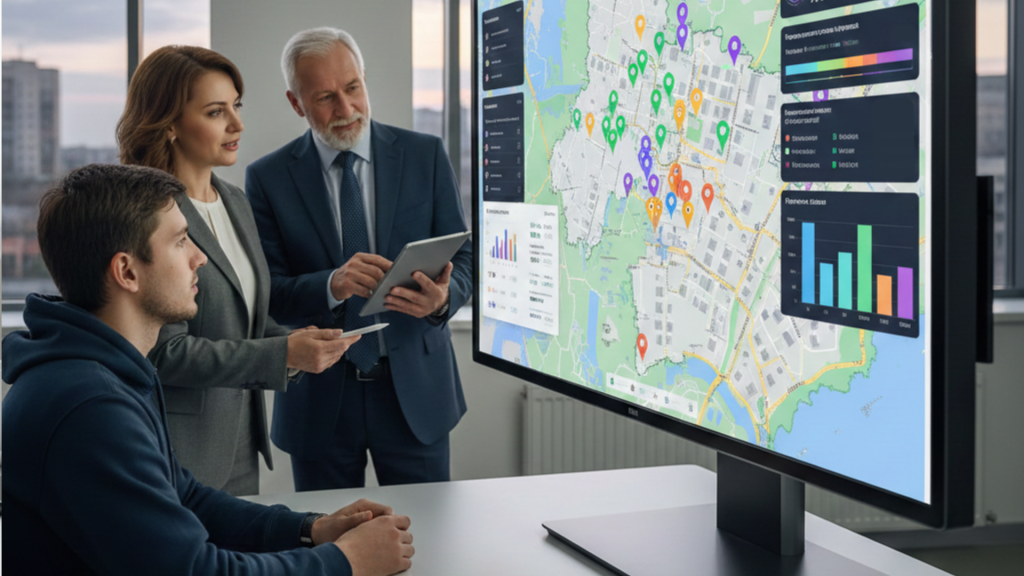
Why is the product “Address Register” a “lifeline” for your architecture department?
We have developed a solution that automates the most complex stages of working with registers:
- A single data window:We integrate existing spatial data – urban planning documentation (general plans of settlements, detailed plans of territories), orthophoto plans, topographic plans, land management documentation and others into a convenient Geoinformation system. This method helps to avoid misunderstandings with addressing objects.
- Automation of verification:Our system helps to quickly identify discrepancies between the databases of different departments, saving a lot of time for the architect.
- Working with geospatial data:You don't need to be a mapping expert. Our product ensures the adaptation of addressing data to the requirements of EDRA, which simplifies the uploading of exchange files to the state registry.
Don't wait until deadlines are critical. Turn routine into a digital advantage for your community today.
ℹ️Sign up for a free consultation on the implementation of the “Address Register”:https://magneticonemt.com/about-us/contact-us/#form_contact-us
👉 Learn more about system capabilities: magneticonemt.com/adresnyj-rejestr-hromady/